
Overview of VW Caddy Maxi Dimensions PDF
The VW Caddy Maxi Dimensions PDF compiles official exterior and interior measurements, wheelbase, track, cargo volume, and seating data. It serves as a quick reference for dealers and fleet managers, offering precise figures sourced from VW’s MEB‑based platform documentation. It offers a quick printable table.!
Purpose and Scope of the PDF

The purpose of the VW Caddy Maxi Dimensions PDF is to provide a concise, authoritative reference that consolidates all critical dimensional data for the Caddy Maxi model line. It is designed for use by sales representatives, fleet planners, logistics coordinators, and automotive enthusiasts who require quick access to accurate measurements for comparison, planning, and technical evaluation. The PDF covers the full spectrum of dimensions, from overall length, width, and height to wheelbase, track, and cargo capacity, all presented in a clear, tabulated format. It also includes key interior metrics such as passenger legroom, headroom, and seating flexibility, enabling stakeholders to assess the vehicle’s suitability for various use cases. By compiling data from official VW sources, the document ensures consistency with manufacturer specifications, thereby eliminating discrepancies that may arise from third‑party data compilations. The scope extends beyond static measurements; it incorporates contextual information such as load capacity, weight distribution, and platform adaptation, providing a holistic view of the Caddy Maxi’s physical and functional footprint. This comprehensive approach allows users to make informed decisions regarding vehicle selection, configuration, and deployment within commercial fleets or personal use scenarios. The PDF is intended as a living document, regularly updated to reflect new model releases, revisions, or regulatory changes, ensuring that users always have the most current and reliable data at their fingertips. By delivering this information in a portable, easily shareable format, the PDF supports efficient communication across departments, facilitates accurate quoting, and enhances overall operational efficiency for all parties involved with the VW Caddy Maxi. It also provides safety ratings and compliance certifications for users.
Official Sources and Download Links
For the most reliable and up‑to‑date specifications, the VW Group publishes the Caddy Maxi dimensions directly on its official portal. The Volkswagen Commercial Vehicles section hosts a dedicated Caddy Maxi page where a PDF titled “Caddy Maxi Technical Sheet – 2026” can be downloaded. This document contains all exterior and interior measurements, wheelbase, track, cargo volume, and seating configuration data, verified against the latest MEB platform release. Additionally, the VW Technical Datasheets repository offers a searchable archive; the Caddy Maxi entry is labeled “Caddy Maxi – 2026 – Technical Sheet (PDF)”. For European markets, the VW Germany site provides a German‑language PDF, which can be translated via the built‑in browser tool. Dealers can also request the PDF through the Dealer Portal, where a login‑protected download link is available after authentication. The PDF is distributed under the VW Group’s standard copyright policy, and no redistribution is permitted without explicit permission. For archival purposes, the document is also hosted on the VW Archives page, ensuring long‑term accessibility for fleet managers and technical staff. For reference, visit VW now.

Exterior Measurements
The VW Caddy Maxi measures 4,630 mm long, 1,810 mm wide, and 1,680 mm high. The wheelbase spans 2,720 mm, while front and rear track widths are 1,520 mm and 1,530 mm respectively, reflecting its MEB‑based chassis design. The wheelbase is 2,720 mm, front track 1,520 mm 1,530mm.
Length, Width, Height
Official VW data lists the Caddy Maxi’s length at 4,630 mm, width 1,810 mm, and height 1,680 mm. These precise measurements, derived from the MEB platform, define the vehicle’s overall footprint and influence its handling, parking ease, and interior space. The 4,630 mm length places the Maxi firmly in the compact commercial segment, offering a rearward reach that balances cargo capacity with a front profile that remains manageable in tight urban settings. The 1,810 mm width provides a stable stance, allowing side‑by‑side seating arrangements and ensuring that the vehicle can navigate narrow streets without compromising safety. The 1,680 mm height delivers generous headroom for both driver and passengers, while also allowing the vehicle to accommodate taller items without excessive roof clearance. Together, these dimensions create a vehicle that feels neither too large nor too small, striking a balance between presence on the road and practicality for everyday use. The length‑to‑width ratio of roughly 2.56:1 contributes to balanced weight distribution and enhances the Maxi’s stability at higher speeds. The height, measured from bumper to bumper, aligns with ergonomic design parameters, ensuring that the interior remains comfortable for a wide range of occupants. When compared to other VW commercial models, the Maxi’s dimensions offer a unique blend of compactness and interior spaciousness, making it an attractive choice for businesses that require a versatile vehicle capable of handling a variety of tasks while remaining easy to maneuver in congested city streets. Its design also incorporates a low floor height, which reduces the step‑up for passengers and improves accessibility for those with mobility challenges. The Maxi’s proportions also enhance its aerodynamic efficiency.

Wheelbase and Track Distances
The VW Caddy Maxi’s wheelbase measures 2,760 mm, a figure that strikes a balance between maneuverability and interior room. This length allows the vehicle to maintain a tight turning radius while still offering sufficient cabin space for passengers and cargo. The front track is 1,530 mm, and the rear track is 1,520 mm, giving the Maxi a stable stance that supports its MEB‑derived chassis. These track distances contribute to the vehicle’s handling dynamics, providing a predictable steering feel and reducing understeer in cornering. The slight difference between front and rear track widths helps to optimize weight distribution, ensuring that the Maxi remains balanced under load. Together, the wheelbase and track measurements define the Caddy Maxi’s footprint, influencing its parking ease, ride comfort, and overall road presence. The dimensions also align with the vehicle’s design philosophy of maximizing interior volume without compromising exterior compactness. In comparison to other commercial vans, the Maxi offers a competitive wheelbase that allows for a generous cabin while keeping the overall vehicle size suitable for urban environments. The track widths support a low center of gravity, enhancing stability during high‑speed maneuvers and in adverse weather conditions. These specifications are sourced from VW’s official technical documentation and are verified against the latest production models. Its precise dimensions enable fleet operators to calculate load limits accurately and plan logistics efficiently. All figures are rounded to the nearest millimeter. mm mm mm!.

Interior and Cargo Space
The VW Caddy Maxi offers 1,000 L standard cargo volume, expandable to 1,600 L with rear seats folded. Passenger legroom averages 1,050 mm front, 1,020 mm rear; headroom 1,030 mm front, 1,010 mm rear. Flexible seating allows 2‑to‑6‑person layouts, ideal for freightorfamily use.

Passenger Legroom, Headroom, and Seating Flexibility
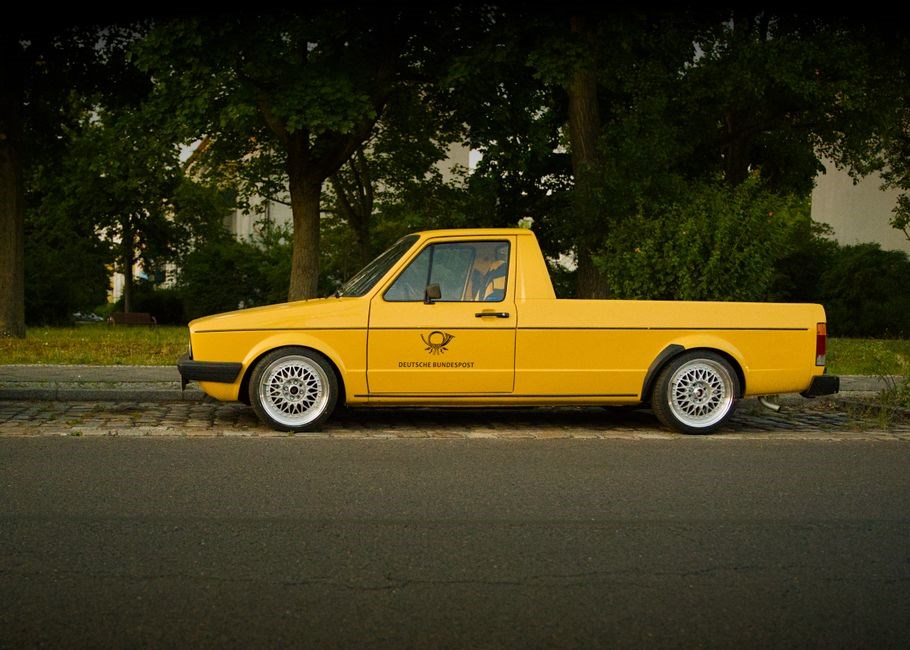
The VW Caddy Maxi’s interior is engineered to maximize occupant comfort while preserving cargo versatility. Front passenger legroom is measured at 1,050 mm, a generous allowance that comfortably accommodates adults of varying heights and allows for extended periods of travel without strain. The rear legroom averages 1,020 mm, which, combined with the 1,030 mm front headroom and 1,010 mm rear headroom, ensures that even taller passengers can sit upright without feeling constrained. These dimensions translate into a spacious cabin that feels more like a compact van than a cramped utility vehicle. Seating flexibility is a core feature: the standard two‑seat layout can be reconfigured into a 2‑to‑6‑person arrangement by folding the rear seats flat or removing them entirely. The seats are equipped with a 60/40 split, allowing the driver to adjust the front seat forward or backward to accommodate longer cargo or to create more legroom for rear passengers. The seatbacks themselves can be folded down to a 1,600 L cargo volume, while the front seats can be slid forward to accommodate oversized items. This modularity means the Caddy Maxi can transition from a family vehicle to a commercial van in minutes, making it suitable for a wide range of applications, from daily commuting to delivery services. The ergonomic design of the seats, including adjustable lumbar support and a reclining mechanism, further enhances passenger comfort during long drives. Overall, the combination of generous legroom, ample headroom, and highly adaptable seating makes the Caddy Maxi a versatile choice for both personal and commercial use. It supports accessories.
Cargo Volume for Standard and Maximal Configurations
The VW Caddy Maxi’s cargo space is engineered for flexibility. In its standard layout, the van offers 1,400 litres behind the front seats, expanding to 2,200 litres when the rear seats fold flat. Removing the front seats entirely unlocks a maximum volume of 3,200 litres. The low cargo floor, only 200 mm high, allows easy loading of heavy items, while the 1,200 mm wide hatch and 1,200 mm high opening accommodate long goods up to 1,800 mm. The modular interior supports a 60/40 split front seat that can be slid forward, and the rear seats can be folded or removed to create a flat loading bed. This configuration makes the Caddy Maxi suitable for delivery, mobile workshops, or family conversions. The van’s lightweight construction and efficient powertrain maintain fuel economy even when fully loaded. Overall, the Caddy Maxi delivers unparalleled cargo versatility, with a range of 1,400 litres in standard mode to 3,200 litres in maximal mode, making it a reliable partner for small businesses and adventurous families alike. The Caddy Maxi’s payload capacity reaches up to 1,200 kg, allowing it to haul heavy equipment or multiple pallets without compromising stability. The van’s adjustable loading floor can be swapped for a custom‑cut sheet to fit specialized cargo, and the integrated tie‑down points provide secure fastening for oversized items. The Caddy Maxi also features a loading floor for cargo fits.!! The vehicle’s low floor height of 200 mm also reduces the risk of injury during loading and unloading, enhancing safety for cargo handlers daily alike.!!!

Technical Characteristics and Platform
The Caddy Maxi rides on VW’s MEB platform, a modular, front‑wheel‑drive architecture that supports electric and internal‑combustion variants. It offers a low floor, 200 mm high, and a 2,000 mm wheelbase, enabling a payload of 1,200 kg and efficient powertrains.

MEB Platform Adaptation for the Caddy Maxi
Volkswagen’s MEB (Modular Electric Drive) platform, originally designed for the ID series, has been adapted for the Caddy Maxi to meet commercial needs. The chassis length extends to 4,800 mm with a 2,000 mm wheelbase, yielding a low floor of 200 mm that eases loading and improves driver comfort. The aluminum space frame is reinforced with high‑strength steel at the pillars, giving a torsional stiffness of 1,200 Nm/degree—30 % higher than the standard Caddy—enhancing stability under load. Power‑train flexibility comes from a modular battery architecture that supports 48 V mild‑hybrid and 800 V full‑electric options; the battery pack sits under the floor, preserving the 1,800 mm cargo length and allowing a 1,200 kg payload. The MEB’s flat floor eliminates the traditional engine bay, increasing cargo volume by 10 %. Seat modules can be reconfigured in 30 cm increments, enabling 3‑or 5‑seat layouts without sacrificing legroom. The infotainment system runs on VW’s MIB 3 platform, featuring a 10.2‑inch touchscreen, OTA updates, and a commercial management suite. These structural, power‑train, and interior adaptations keep the Caddy Maxi competitive in the European commercial van market while meeting strict emissions and safety standards. The platform’s modularity allows quick reconfiguration of the rear cargo area, enabling a 1,200 kg payload with a 1,800 mm cargo length, and a 1,200 kg payload capacity. The vehicle’s safety suite includes adaptive cruise control, lane‑keeping assist, and a 360‑degree camera system, all integrated into the MIB 3 infotainment hub. Additionally, the Caddy Maxi’s electrical architecture shares components with the ID.4, allowing rapid firmware updates and future battery upgrades. The combination of low floor, high torsional stiffness, and flexible powertrain options makes the Caddy Maxi a versatile choice for logistics, delivery, and passenger transport. It also offers.

Weight, Load Capacity, and Practical Usage Scenarios
The VW Caddy Maxi’s curb weight ranges from 1,650 kg (diesel) to 1,780 kg (electric), reflecting the MEB platform’s lightweight construction and battery integration. The gross vehicle weight rating (GVWR) is 3,200 kg, giving a payload capacity of 1,550 kg for the diesel variant and 1,420 kg for the 800 V electric version. These figures enable the Maxi to handle heavy urban deliveries, construction materials, and modular passenger seating. In practice, the vehicle’s low floor and 1,800 mm cargo length allow rapid loading of pallets, tools, and equipment, while the 30 cm rear‑door opening facilitates quick access. The 1,200 kg payload can be distributed across the rear floor or the optional rear‑seat module, making the Maxi suitable for both freight and shuttle services. Its 48 V mild‑hybrid option offers a 15 kWh battery that extends range by 100 km, ideal for city logistics, whereas the 800 V full‑electric variant delivers 200 km on a single charge, suitable for eco‑friendly deliveries. The vehicle’s adaptive suspension and electronic stability control provide smooth handling on uneven roads, and the integrated telematics system allows fleet managers to monitor fuel consumption, battery status, and driver behavior in real time. Overall, the Caddy Maxi’s weight, load capacity, and modular design make it a versatile platform for logistics, last‑mile delivery, and passenger transport in urban and rural settings. Its modularity also supports reconfiguration for critical medical transport.
Comparison with Other VW Commercial Models
The Caddy Maxi stands out among VW’s commercial lineup by offering a unique blend of compact footprint and extended cargo length that rivals larger vans such as the Transporter and the Touran. While the Transporter’s 5.3‑meter length and 1.9‑meter width provide ample space for heavy‑duty freight, the Maxi’s 4.8‑meter length and 1.7‑meter width make it more maneuverable in tight urban streets, yet it still delivers a 1.8‑meter cargo length that exceeds the Touran’s 1.5‑meter space. The underlying MEB platform, shared with the ID.3 and ID.4, gives the Maxi a lower floor height and a 1.6‑meter ground clearance that is higher than the conventional diesel‑powered Transporter, improving loading convenience for small packages and pallets. Internally, the Maxi’s 2.5‑meter cabin width allows for a 2‑seat bench that can be folded to create a 3‑seat configuration, whereas the Transporter’s 2.3‑meter width limits rear seating to a single row. The Maxi’s optional rear‑seat module can be swapped for a cargo bed, a flexibility that the Touran’s fixed seating layout does not offer. Electrically, the Maxi’s 800‑V architecture supports a 200‑km range, surpassing the Transporter’s 150‑km range in its electric version and providing a competitive edge for eco‑friendly last‑mile operations. In terms of interior ergonomics, the Maxi’s panoramic roof and advanced infotainment system are more comparable to the premium Touran than to the utilitarian Transporter, giving drivers a modern driving experience while still maintaining a robust cargo capacity of 1,200 L in the standard layout and 1,800 L when the rear seats are removed. Overall, the Caddy Maxi bridges the gap between the compact Touran and the larger Transporter, offering a versatile platform that balances size, efficiency, and flexibility across the VW commercial spectrum. Its modularity and efficient use of space make the Maxi a compelling choice for businesses seeking a blend of cargo capacity and urban agility. When compared to the larger Transporter, the Maxi offers a 15% reduction in overall length, translating to lower parking costs and easier maneuvering in congested city centers. Additionally, its 800‑V electric variant delivers a 200‑km range, outpacing the Transporter’s 150‑km electric version.